Characteristics of Solid Sumi Ink Sticks
Solid sumi ink sticks and liquid ink may seem similar, but they are distinct, and each has its own merits. While the best approach is to use each for the purpose it suits, here we introduce the “characteristics of solid sumi ink sticks” that are not found in standard liquid ink.
The color and shades of solid sumi
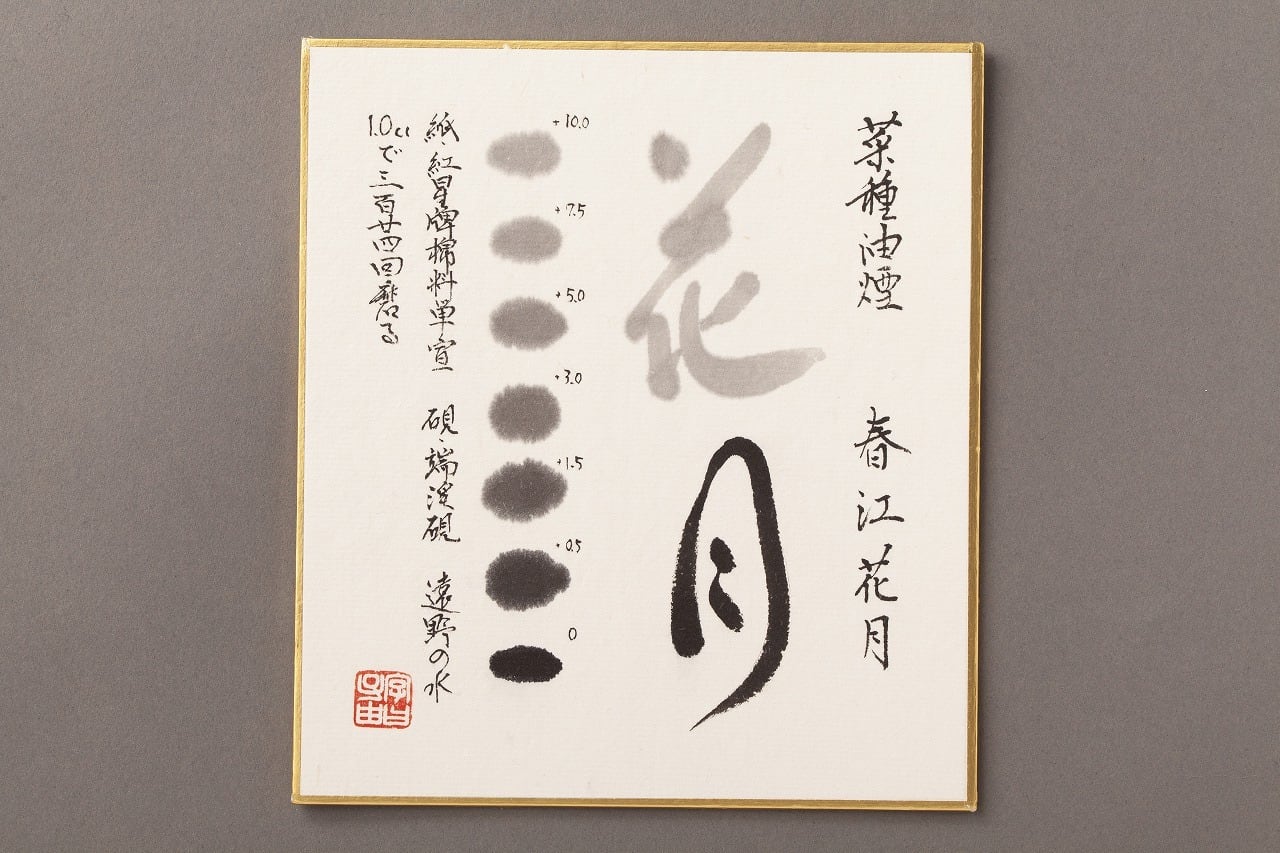
As the saying goes, “There are five hues in ink”: solid sumi possesses a wide range of color tones.
In a word, this range of hues is truly delicate, with a deeply rich and profound spectrum of colors. It is precisely because this simple “black” contains such a wide range of expressive possibilities that artists can create works, not only in calligraphy but also in paintings such as Sumi-e, that make full use of this breadth of color. Furthermore, one of its major features is that users can freely control the range of shades simply by adjusting the amount of water used.
Sumi bleeding
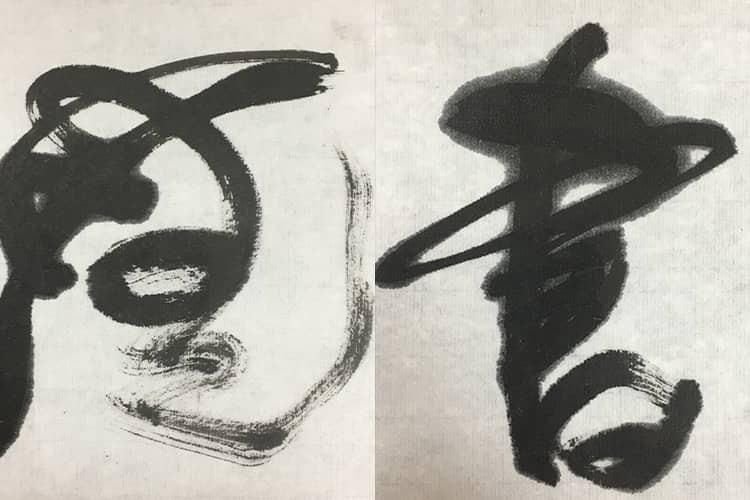
A unique expressive quality of solid sumi is the phenomenon known as “bleeding.”
“Bleeding” refers to the way the ink, having mixed with water, flows outward from the edges of the characters written with the brush, spreading and seeping through the fibers of the paper as if crawling. It is this very bleeding that lends further depth to the written work; indeed, some artists even create works that make extensive use of this effect. While there are many writing materials in the world, solid sumi is truly a rare and precious medium, unparalleled in its expressive power through this unique bleeding effect.
Sumi characters last for 1,000 years
In fact, the Shōsōin Repository in Nara still houses wooden tablets and Japanese paper inscribed with sumi over a thousand years ago, and those characters have been preserved to this day without fading. The overwhelming durability of works written in sumi is unmatched by any other writing medium, making it truly one of a kind.
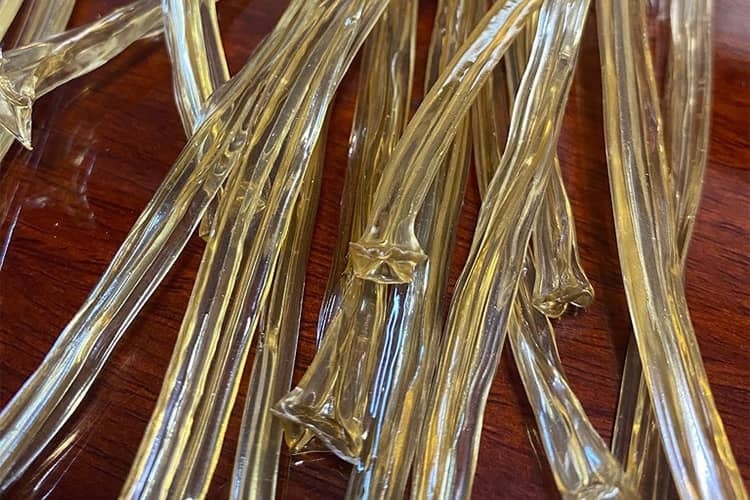
This is due to “nikawa” (animal glue), one of the main ingredients of sumi. Nikawa mixes well with water and works to carry the written characters deep into the fibers of the underlying wood or paper, allowing them to permeate. Once the characters have permeated the fibers and hardened, they will never fade. This durability is truly unique to solid sumi containing nikawa. It is a testament to the greatness of sumi, which has woven the fabric of Japanese history.
Enjoying the time spent making sumi ink
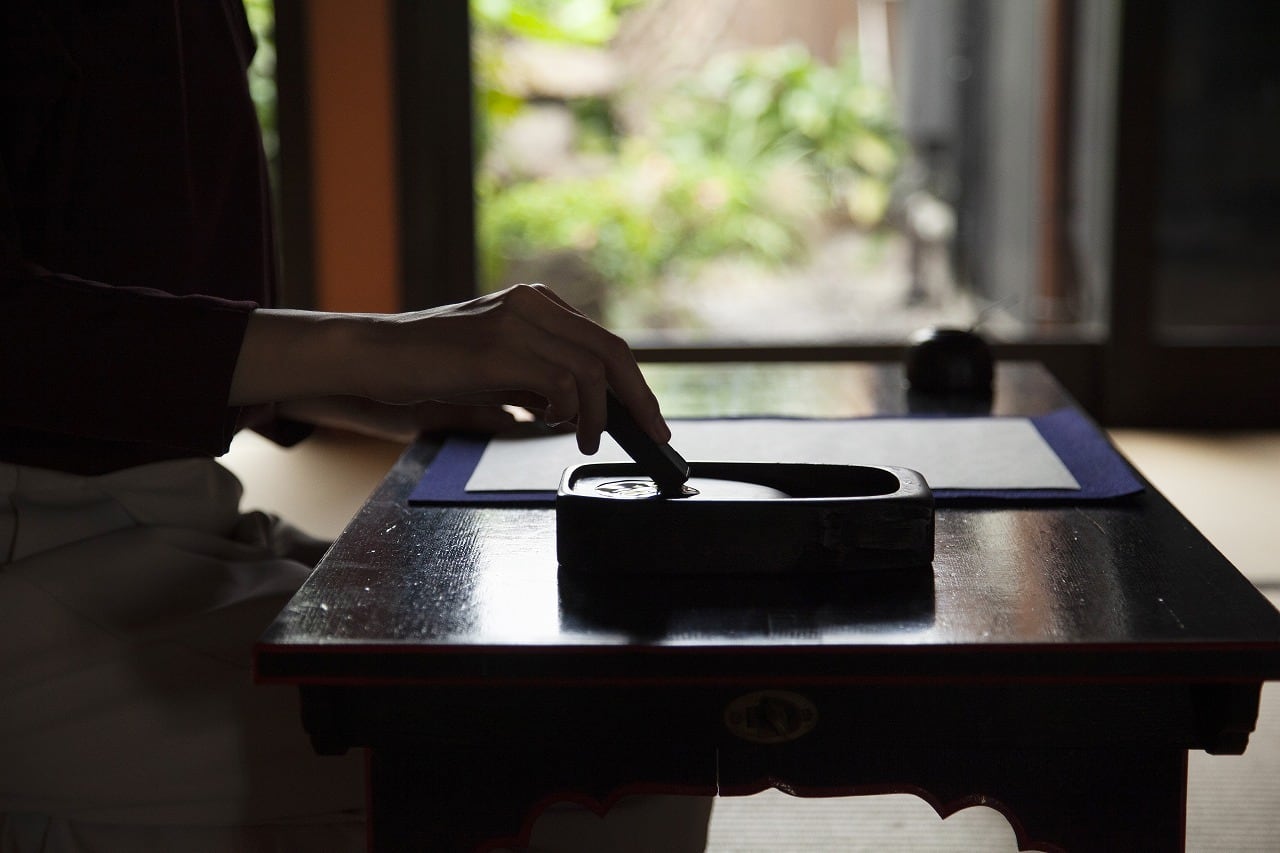
The decisive difference from liquid ink lies precisely in this “time spent making sumi ink.”
Japan has many “ways” (do): calligraphy, flower arrangement, tea ceremony, judo, kendo… All of them incorporate the etiquette and rituals that are essential before beginning an activity or during the process itself. It is precisely by adhering to etiquette and protocol, calming one’s mind, and preparing one’s heart that one can concentrate fully on the task at hand.
The “time spent making sumi ink,” which has existed in Japan since ancient times, can be described as nothing less than “time to prepare one’s heart” for engaging with calligraphy. In today’s world, where we pursue convenience to an extreme, there are moments we must never lose. Could it not be said that the time spent making sumi ink is one of them?
Sumi ink stick sizes
The unit of measurement for ink stick size is “chō.” This is based on weight, with a 1 chō ink stick weighing 15g.
Please note that the table below is intended as a general guide, and there may be slight variations between individual ink sticks.
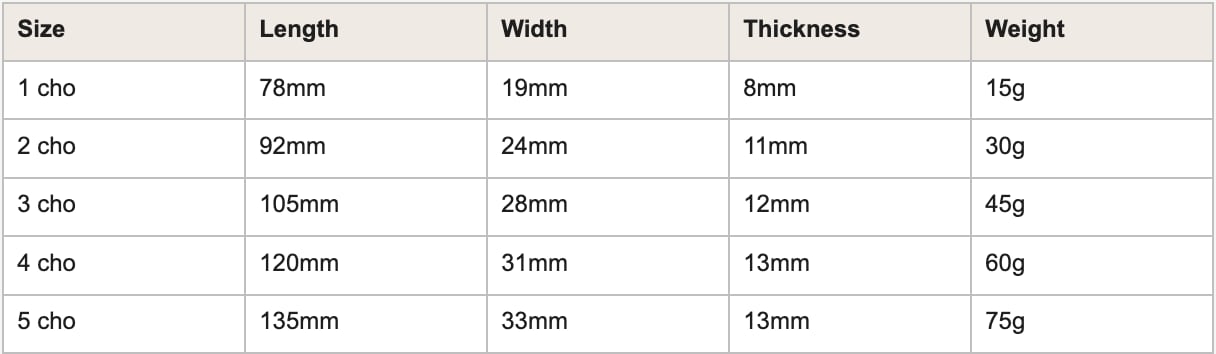
- 1 chō — 15g — Small. The everyday size for regular practice.
- 2 chō — 30g — Medium. A longer working life.
- 3 chō — 45g — Large. For bigger formats and longer sessions.
- 4–5 chō — 60–75g — Extra Large. For big-format calligraphy, and for keeping.
Sumi ink stick types
Sumi is made from three raw materials: soot, animal glue, and fragrance. Generally, ink sticks are classified based on the type of soot used.
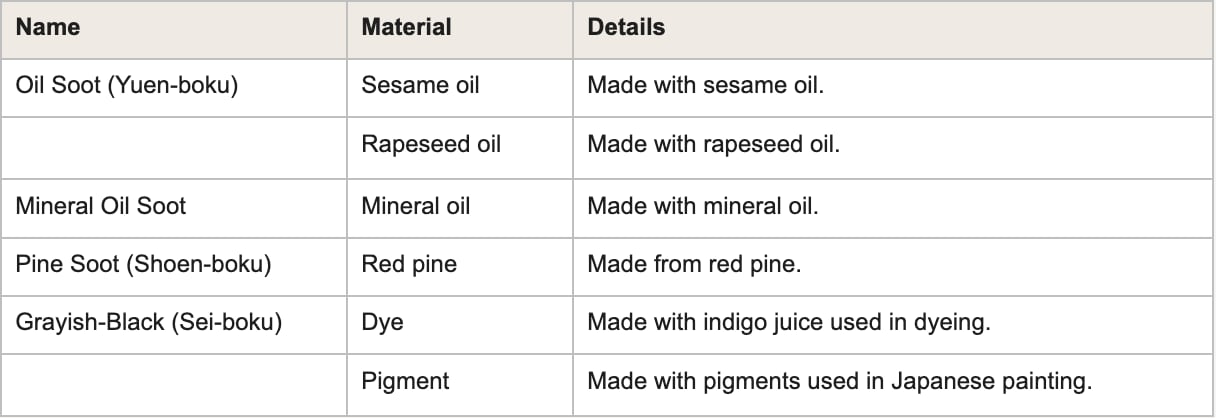
Oil Soot (Yuen-boku)
The majority of sumi ink sticks on the market are Oil Soot (Yuen-boku) ink sticks made with rapeseed oil soot. Among Oil Soot (Yuen-boku) ink sticks, there are also those made with sesame oil soot, and some are made with tung oil or other oils.
Pine Soot (Shoen-boku)
Pine Soot (Shoen-boku) ink sticks are made with pine soot produced by burning red pine wood. Currently, domestic pine soot is produced only by specific businesses in specific locations within Japan, making it highly prized for its rarity.
Grayish-Black (Sei-boku)
Grayish-Black (Sei-boku) ink sticks are made by adding indigo extract, the same used in indigo dyeing, or pigments, to the basic raw materials of sumi to create color. The added color gives the black a slightly gray, cooler cast that sets it apart from soot alone.
Find Your Sumi Ink Stick
Ready to choose? See which ink stick suits what you plan to write or paint.